 To All Posts
When Do Patents Actually Become Leverage? What 9,700 Asserted Patents Reveal


IP teams often face a quiet but critical question: Which patents today will actually matter ten years from now?
We analyzed ~9,700 asserted patents from the past five years and a few findings stand out:
Assertion Is Usually a Mid Life Event
Only ~8% of asserted patents were enforced within four years of priority.
The median age at assertion is ~13 years. Most patents that become leverage sit in portfolios for a decade before they matter.
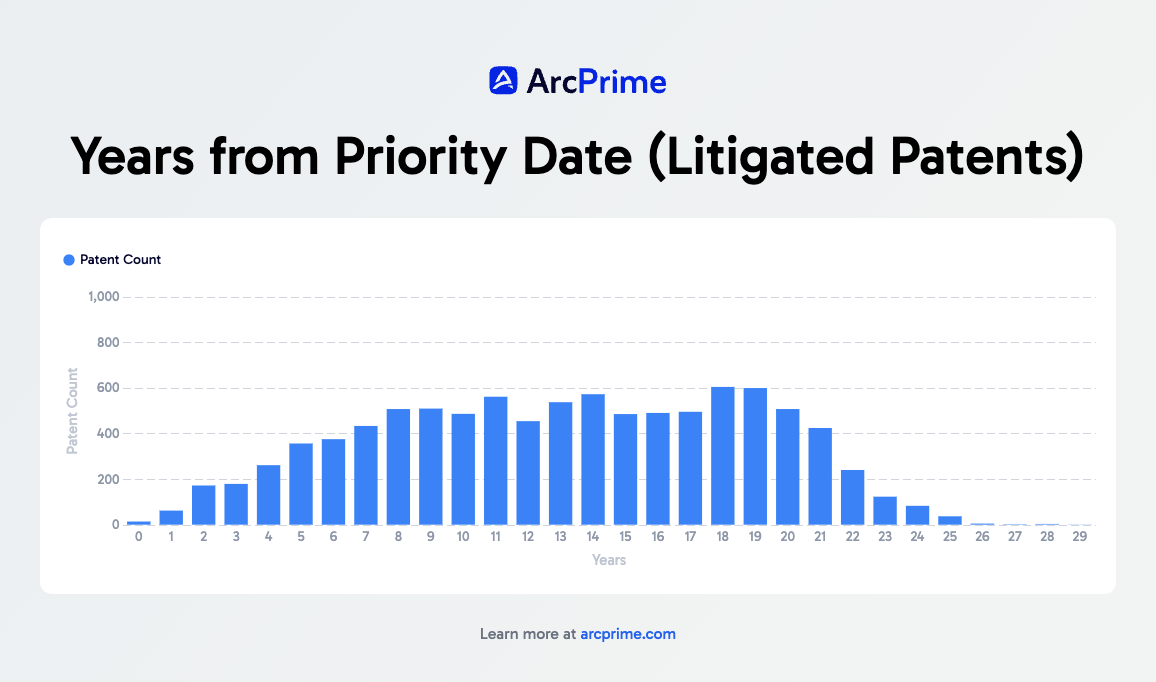
Are your early drafting and prosecution decisions built for that kind of lifecycle?
Continuations Keep Patents Relevant
About 50% of asserted patents were continuations (vs ~20% in a control group). Continuations preserve optionality and this is what allows a patent to stay aligned as products, standards and markets evolve.
How many continuation windows in your portfolio are quietly closing?
“This One Matters” Instincts Often Pay Off
Asserted patents were more likely to have used Track One or filed Notices of Appeal. In other words, when teams treated an application as strategically important early on, that instinct often proved correct years later.
The real portfolio risk isn’t under-investing in every patent, it’s failing to recognize which ones deserve to survive into their leverage window.
The full article explores what this lifecycle data means for IP strategy, prosecution decisions, and portfolio management.
If you’d like the complete analysis, download the full report here
