Most portfolios reflect access, not strategy
One of my favorite parts of being in-house counsel was meeting with inventors. It was how I knew what the company was actually building and where the world was going.
After a few years in-house, I started to worry I'd lose my sharpness as a drafter.
Here are 10 prompts that’ll replace your patent attorney!! Jk, but these prompts really do help. They draft claims from disclosures, review application drafts, search for prior art, build claim charts, file continuations, and make portfolio decisions across thousands of patents.
A group of us IP attorneys are starting a community for inhouse counsel who want to learn how to use AI well in their daily work. AI is already transforming how legal work gets done, and execution is no longer the bottleneck. Improved results will not only show up for the individual via legal work product, but whole organizational structures & expectations may need to be rebuilt around workflows enabled by AI. For example, counsel may now need to spend time coordinating agents (adjust prompts, providing context) to do work they couldn’t do before.
We may be entering a world with dramatically stronger patents. The rate of innovation and filings may stay the same or accelerate, but the bar for non-obviousness could rise as models get stronger.

We analyzed ~9,700 asserted patents and found that enforcement is typically a mid life event, with a median assertion age of about 13 years. The data suggests that early prosecution choices and continuation strategy, not claim volume, are what most often determine which patents mature into real leverage.

Patent forward citations are often treated as a shortcut for patent value — more citations supposedly mean higher enforcement potential. But recent analysis of 4,300 US patents shows many asserted patents have surprisingly few citations, while highly cited patents aren’t always enforcement-ready. Could your portfolio be overlooking hidden enforcement leverage?

Patent family size and continuation strategy play a critical role in which patents are ultimately asserted. Drawing on 6,500+ US patent litigations, this piece explores what the families behind asserted patents reveal — and how early prosecution decisions can shape enforcement readiness long before litigation begins.

Analysis shows that patents ending up in court are far more likely to be acquired than invented, challenging the assumption that organic filing alone delivers enforcement-ready coverage, based on 6,500+ US patent litigations in the last 5 years. If assertion is so often bought on the secondary market — by both NPEs and operating companies — what does that mean for how portfolios should really be built?

What can the claims of 9,600 asserted patents from the last five years tell us about building stronger portfolios? This post uncovers surprising claim drafting patterns across industries and kicks off a short series using real litigation outcomes, not intuition, to shape portfolios from the patent up.
I analyzed 9,700 asserted patents from 6,500 litigations over the last five years and compared them to a control set of 10,000 randomly selected granted patents from the same period. Here's the insights I found most interesting:
As I reflect on 2025, I think about the 2 characters that changed my entire mental model of the world: O3. Released only 8 months ago, O3 is OpenAI’s first reasoning model that can produce genuinely useful legal work. ArcPrime's features, from claim charts to continuation recommendations, only work because of reasoning models. They are what give folks “tingles” on the future of the profession.
The worst thing about patents is the SLOW feedback loop. The field doesn’t evolve quickly, bad policies and inefficiencies linger, and there’s almost no room for real experimentation. You can file something today and not learn whether it mattered until long after everyone involved has changed jobs.

Building a patent portfolio is more political than people think. The obvious answer, "patent what's valuable", is not so straightforward.

When I first got to Facebook, I was dying to know how the world’s top companies actually used patents. Up to that point, all I knew was how to write and obtain high-quality ones — the craft, not the strategy.
I'm ecstatic to share that ArcPrime has raised $5.1M 🎉 in combined seed and preseed funding, led by early Datadog-backer RTP Global and Rackhouse Venture Capital, with participation from Leonis Capital, Atria Ventures, and leaders from NVIDIA, Meta Superintelligence, Apple, and Braze.

This year, most of our team met in Chongqing, China — the multi-level cyberpunk city. In Chongqing, uptown and downtown describe altitude, not direction. We surrounded ourselves with neon lights one day and raging waterfalls in Wulong Karst the next.
People tend to overcomplicate patent strategy. But it’s really simple: nobody pushes around the person with the biggest gun.
Most advice is a Rorschach test - it means different things to different people. Take the classic: “Do one thing well.”

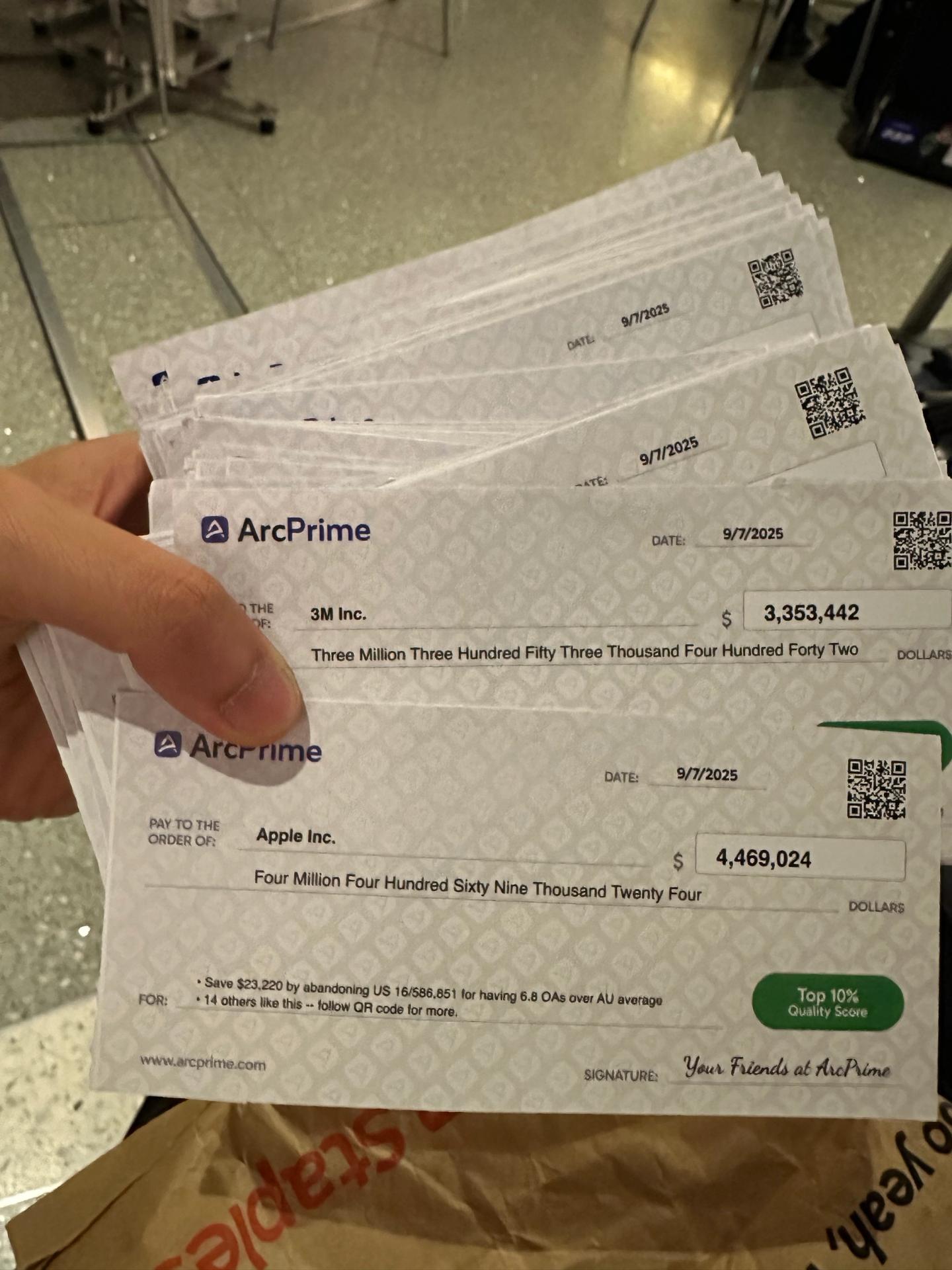
Great to see everyone at IPO! It was a great experience meeting new folks from all over the industry. We did 2 things:

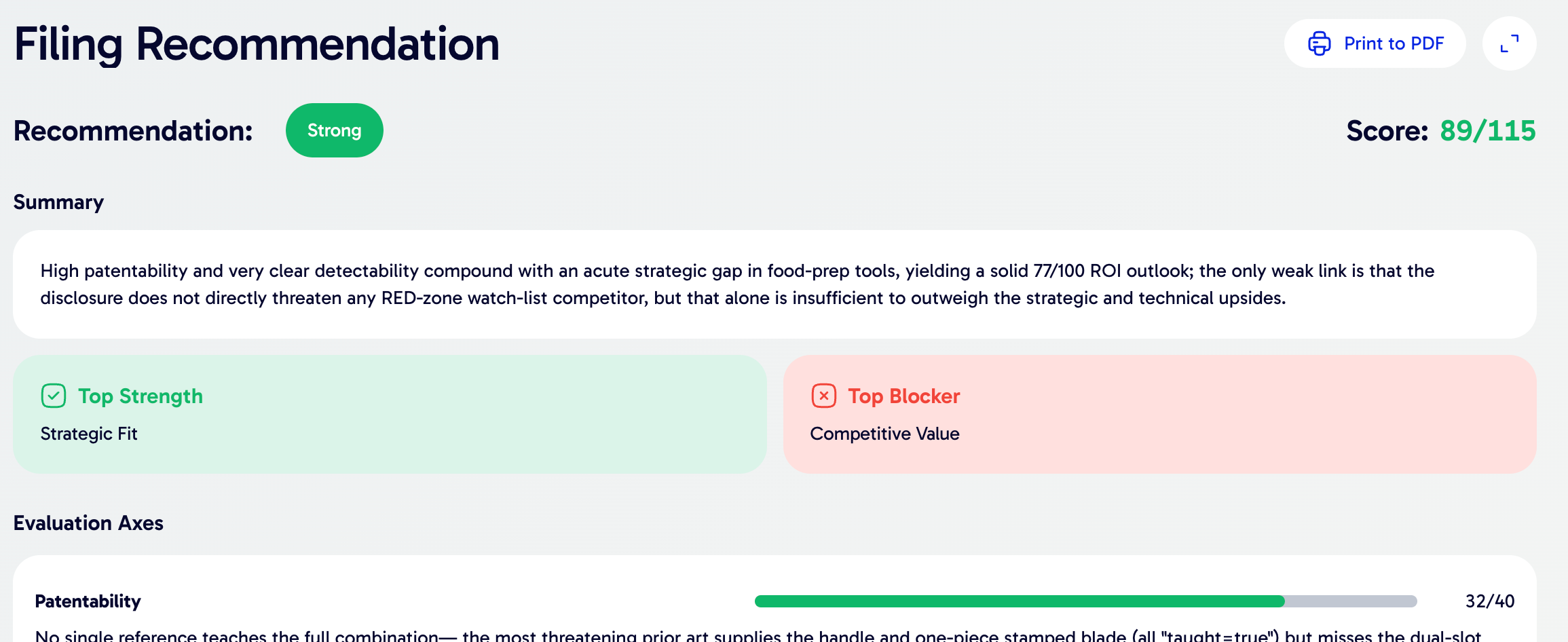
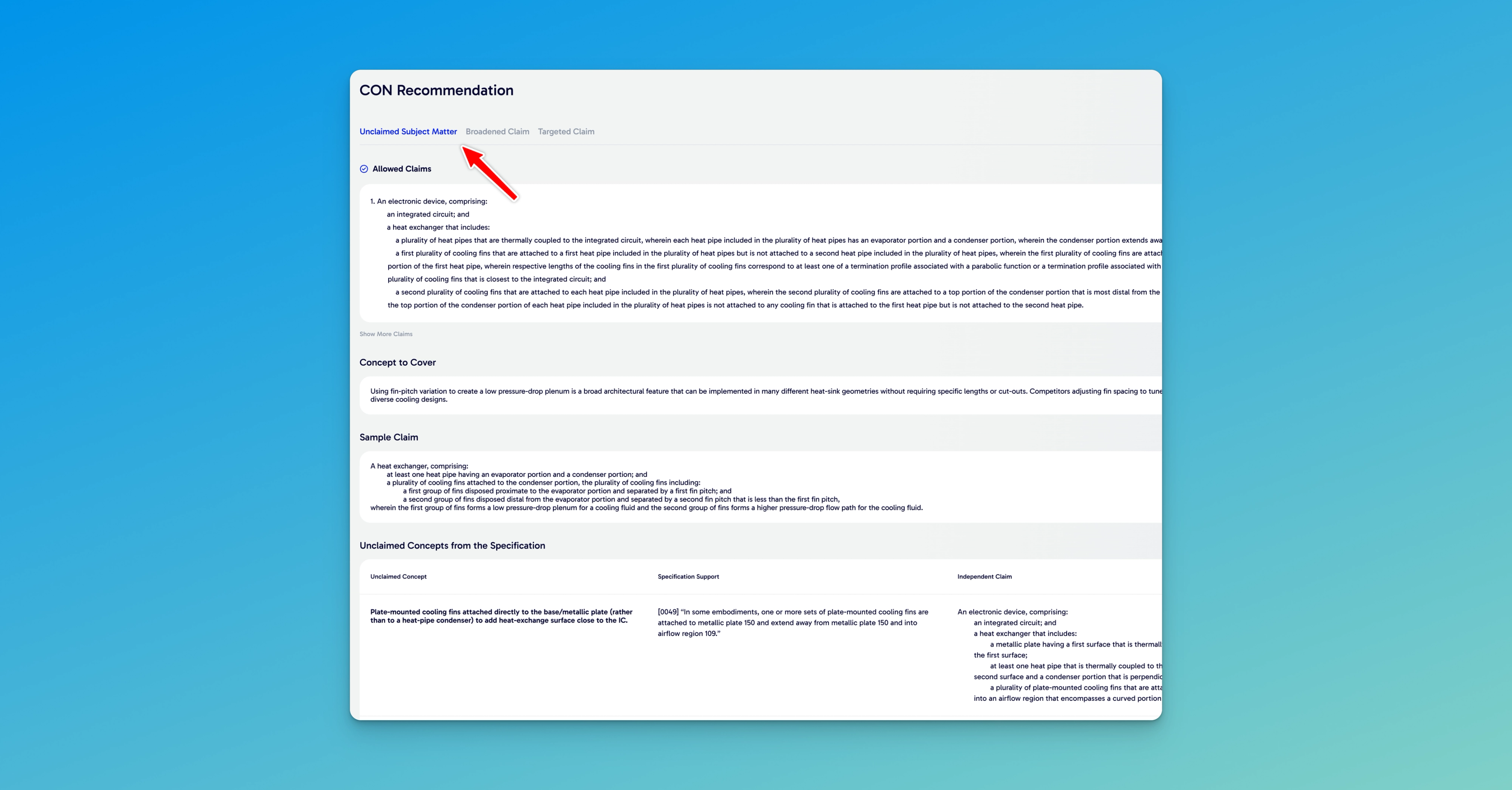
I've seen thousands of continuation recommendations. Our AI-generated recommendation beats all of them.

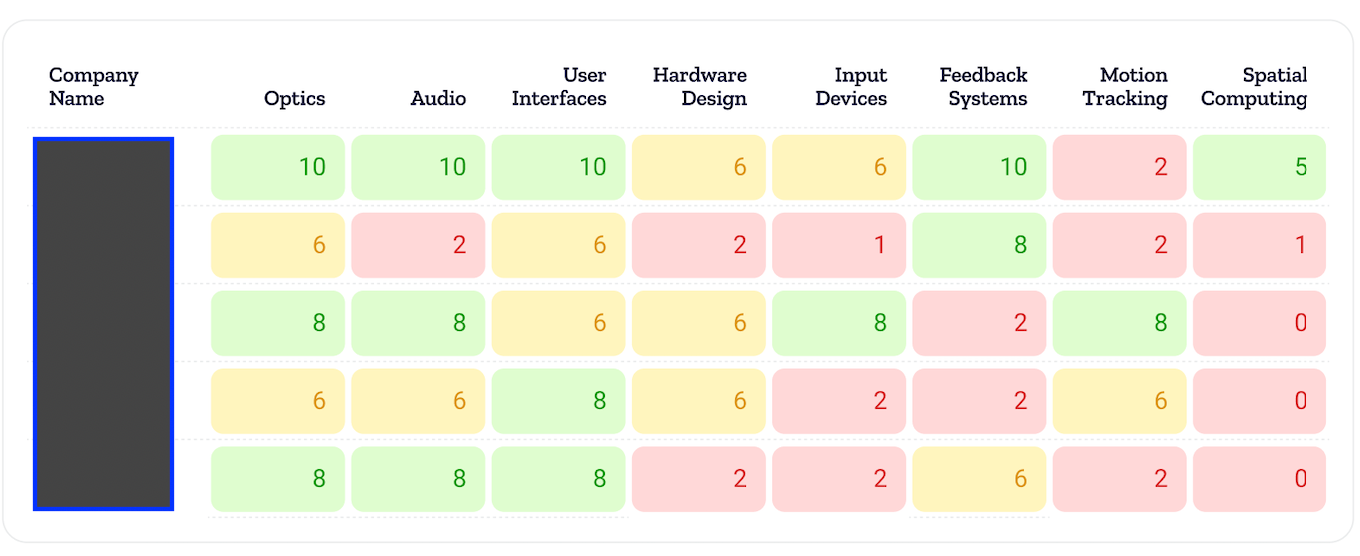
Most companies don’t know which of their patents are the best. And how could they? To find out, you’d normally need outside counsel to build claim charts costing 5 or 6 figures.
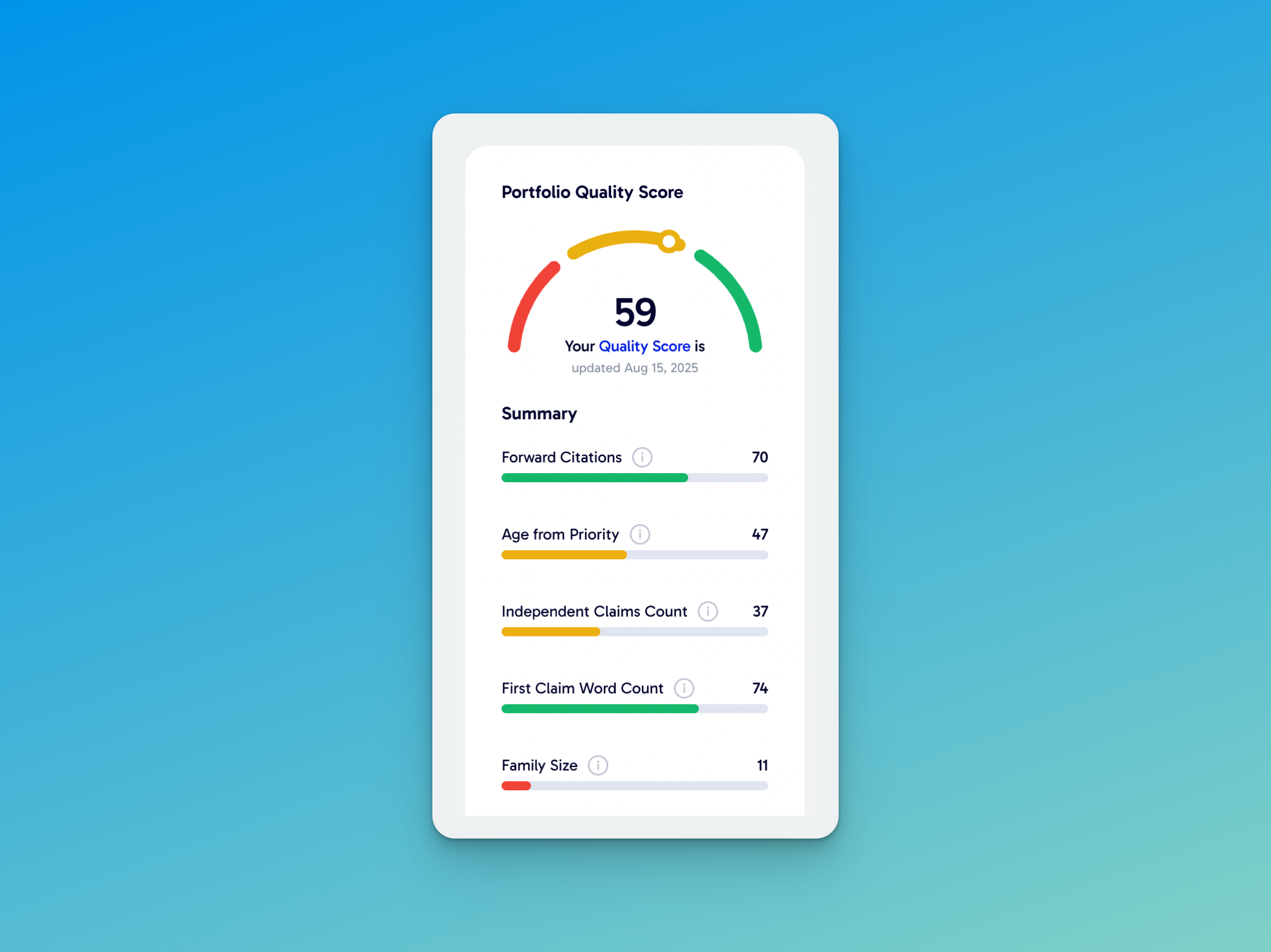
Super proud of the team for what has been a monstrous July! I'm most excited about patent charts and product charts. I've long wondered how to identify the most valuable patents in a portfolio at scale. Traditionally, folks used analytics such as number of forward citations, among a few other factors. While this is useful, and we are shipping this in August, the better proxy of value is if you can find live products in the marketplace using your patents.

Most ideas aren’t obviously great. But they’re also not obviously bad. They exist in this uncomfortable middle ground. This is where companies make their worst patent filing decisions.
A partner at a law firm once looked at something I wrote and scolded, “Do you know how to write a paragraph?” I thought I was better than average given I passed the bar and did well in some college writing courses. Apparently not. I had to relearn the basics: use topic sentences and break ideas into digestible pieces.

Many attorneys are hoarders. They'd pay any fee to keep a case alive until the bitter end. Ask them why and you'll hear the same thing: "Just in case!" or "But I've spent so much money on it!" Are these strategies or habits?
We’ve grown faster than expected since launching almost two months ago! There’s real hunger for 1) AI-powered workflows that make teams more efficient and 2) a modern take on IP software.
Slightly hot take: It's a great time to be a specialist. I used to think generalists had the edge. David Epstein's Range convinced me that breadth beats depth. I even switched from patent counsel to product counsel, hoping that exposure to different legal domains as a 'mini-GC' would make me a better attorney.
If you're looking for an easy 10% performance boost, minimize the friction of getting your thoughts to an LLM. Install the desktop app, learn the shortcut, or keep the tab open - whatever gets you feedback faster.
When choosing outside counsel, pay attention to the associates. As a former associate, I learned that they don't just support the process; they critically shape it.
The first time I saw true craftsmanship was at Fish & Richardson. Seeing Hans Troesch's work was like seeing a new primary color. Hans is a once-in-a-generation craftsman who redefined "excellence" for me.
Hello, world. I've been lurking for 20 years. But the problems that excite me now won’t let me stay there.